The Concord Consortium is proud to announce a new grant from the National Science Foundation for our Intelligent Simulation-based Learning About Natural Disasters (ISLAND) project. ISLAND will harness the power of artificial intelligence to help middle school students explore wildfires, floods, and hurricanes through scientific simulations—building critical knowledge and science practices for understanding and responding to natural hazards.
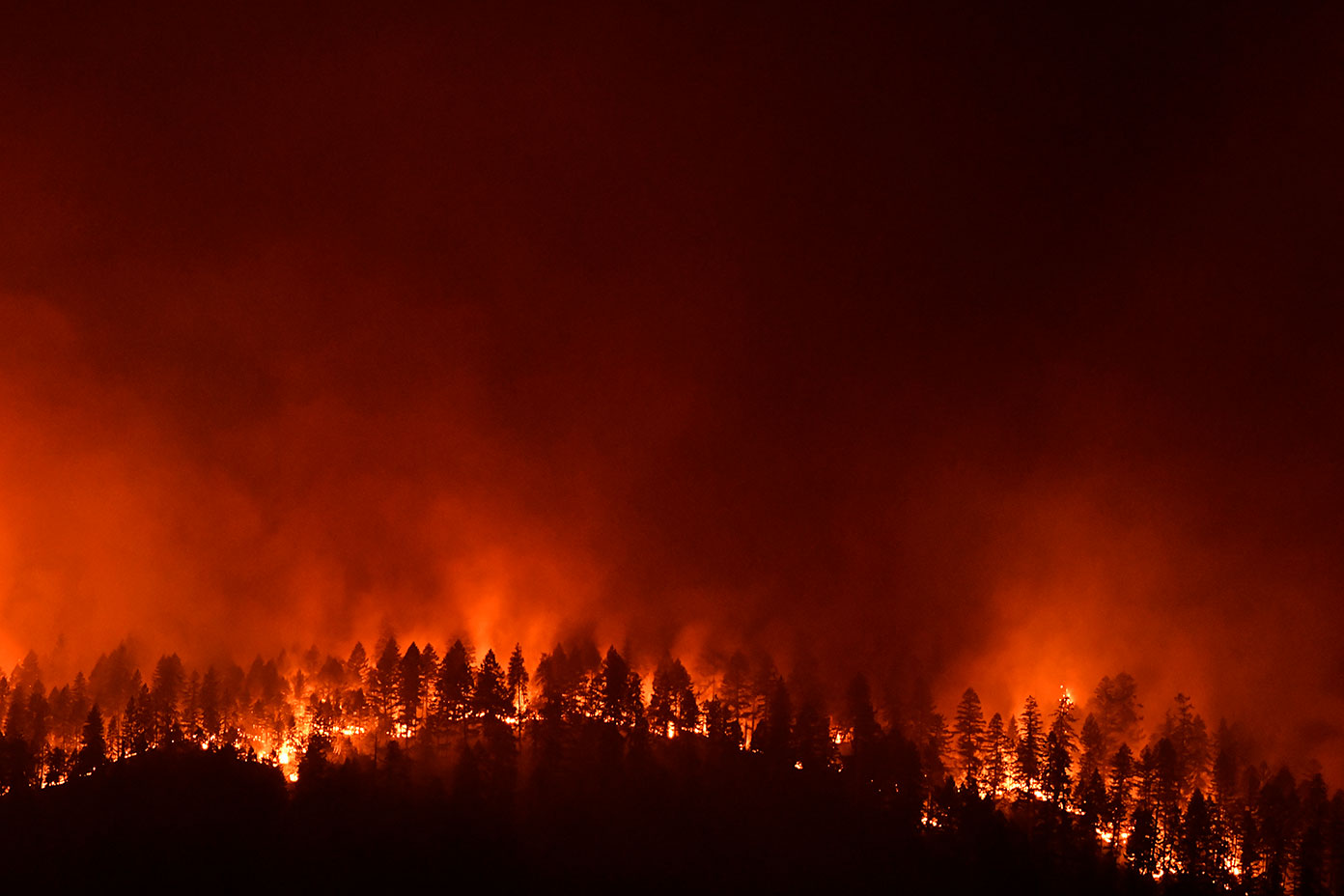
Rum Creek fire near Merlin, Oregon, August 2022. (Robert Hyatt, NOAA’s National Weather Service).
Natural hazard science
The urgency of this work is clear. Wildfires are spreading faster, floods are becoming more severe, and hurricanes are leaving unprecedented damage in their wake. Preparing the next generation to make sense of these complex Earth systems and their impacts is essential.
Using simulations students can investigate hazards that are otherwise too vast or dangerous to study directly. They can run scenarios, test variables, observe cause-and-effect relationships, and make predictions. But prior research shows that students may test only a few simulation parameters, overlook key starting conditions, or fail to collect enough evidence for strong conclusions. They need more guidance.
This is where AI can lend a hand.
ISLAND will create Hazbot, a next-generation AI feedback system designed specifically for simulation-based inquiry. Hazbot will operate as a two-tier system that supports both students and teachers. For students, Hazbot will interpret their use of simulations, data, and written responses in online curriculum modules, and offer real-time, personalized feedback to guide their inquiry. For teachers, Hazbot will synthesize classroom data and provide clear, actionable insights, making it easier to support all students and keep inquiry on track.
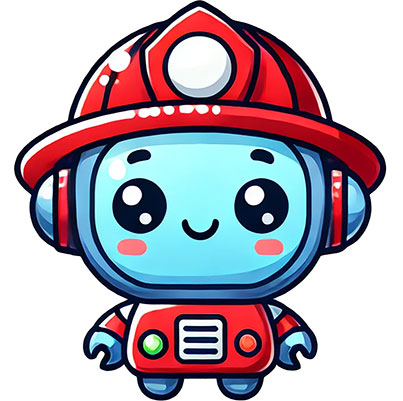
Our new Hazbot will act as a friendly assistant. In this version, Hazbot is designed to guide students and teachers using the wildfire curriculum module.
Hazbot’s dual design extends well beyond traditional AI tools that simply grade short responses or answer isolated questions. Hazbot will support the entire inquiry process—from setting up simulations and collecting data to interpreting results and constructing evidence-based arguments.
Building on prior NSF success
ISLAND builds on two prior NSF-funded projects that together established the foundational curriculum, assessments, and research base. ISLAND is extending this work using multi-modal data inputs and generative large language models (LLMs).
- Our GeoHazard project developed curriculum modules on wildfires, inland flooding, and hurricanes, used by over 25,000 students with significant learning gains. We will upgrade these modules with the Hazbot system.
- Our Automated Scoring for Argumentation project pioneered the use of automated feedback for student scientific arguments and demonstrated that targeted, real-time guidance improves reasoning and revision. We will model our new Hazbot system on the original “Hasbot,” which was an early prototype for feedback using artificial intelligence.
Research plan
We will first work closely with 9 teacher partners who have used our prior GeoHazard and Hasbot-enabled modules and their 900 students to develop and refine Hazbot. We will then expand to a large-scale, randomized controlled trial with 72 teachers and 3,600 students nationwide. This study is designed to measure Hazbot’s impact on learning outcomes, particularly students’ understanding of natural hazards and their ability to construct evidence-based scientific arguments.
ISLAND will generate critical insights into the design of LLM-based feedback systems, ensuring that they uphold disciplinary standards, scaffold diverse learners’ inquiry practices, and integrate seamlessly with teachers’ expertise in real-world classrooms.
Looking ahead
By combining cutting-edge AI with proven science curriculum, ISLAND aims to transform how students engage in simulation-based inquiry and how teachers can best guide that process. All Hazbot-enhanced curriculum modules will be shared at no cost to teachers and students around the country. Our goal is to equip students with the knowledge and experience to make sense of natural hazards—and to prepare for the challenges of a rapidly changing world.