Category: Tag: CODAP

The Concord Consortium is thrilled to partner with PhET in their new data fluency initiative. PhET’s free research-based simulations engage students in a game-like environment—and importantly, the sims generate data. While most of PhET’s traditional physics simulations are idealized models without noise or measurement error, new sims include real-world variability. This means the data they […]

To ensure that blind and low-vision (BLV) learners can engage meaningfully in data science education, we’re designing an AI-supported natural language plugin for CODAP called DAVAI (Data Analysis through Voice and Artificial Intelligence). Students use voice or typed input to ask questions about datasets in CODAP, then get dynamically generated descriptions and optional sonification—hearing the […]
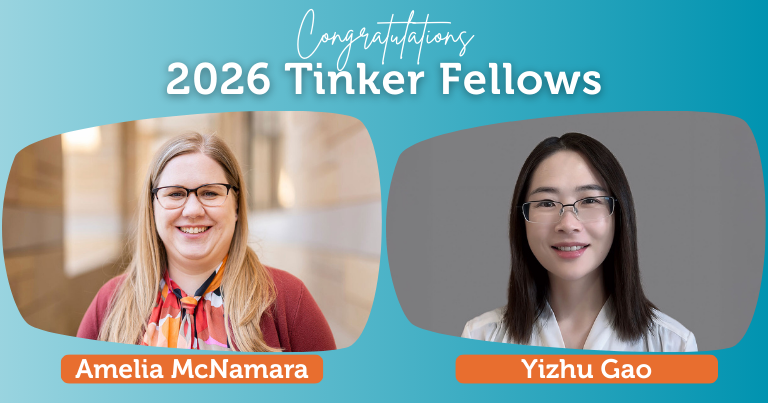
The Robert F. Tinker Fellows Program aims to promote innovation, creativity, and cross-disciplinary conversations. We’re thrilled to announce that two 2026 Tinker Fellows will focus on innovations in artificial intelligence (AI) to help transform teaching and learning. Amelia McNamara will explore how custom AI models can support teachers’ and students’ critical thinking and data science […]

Want to introduce data science with CODAP to your middle and high school students? Through a partnership with Bootstrap, you can get started with a free web-based set of materials. Developed by the Bootstrap team, the Data Literacy curriculum is a comprehensive, flexible data literacy course designed for students in grades 7-9 that uses CODAP […]

This week, a major snowstorm stretching from Texas to Maine is forecasted to affect millions of people. Many people throughout the U.S. now face the same questions. Do I have time to run to the store for more groceries before the heaviest snow is going to fall? Is school going to be delayed or canceled? […]
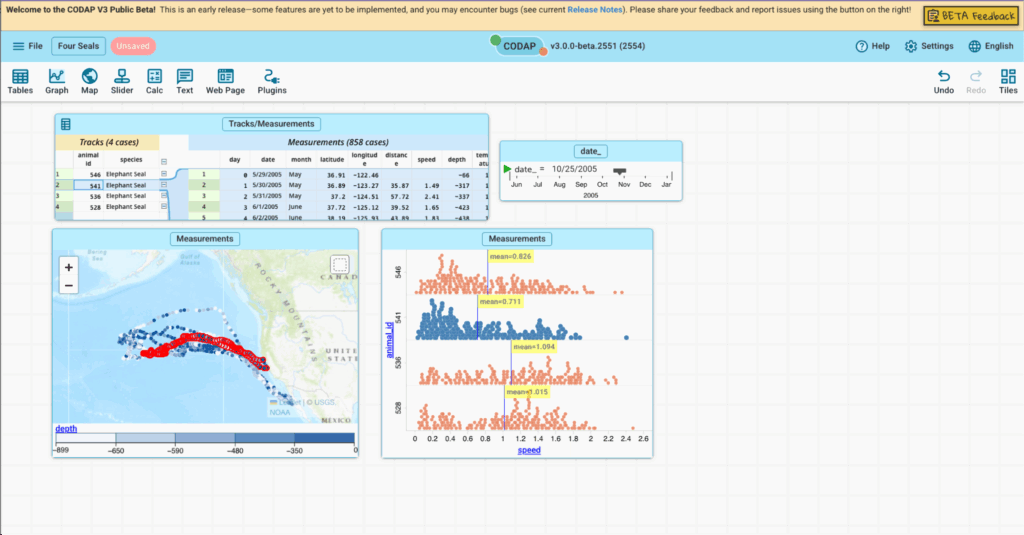
Our Common Online Data Analysis Platform (CODAP)—used by over 3.5 million users worldwide—is one of the most popular tools for data exploration. And now it’s better than ever! The beta release of CODAP V3 is officially live and ready for you to try. At the Concord Consortium, we like to dream big. One of our […]
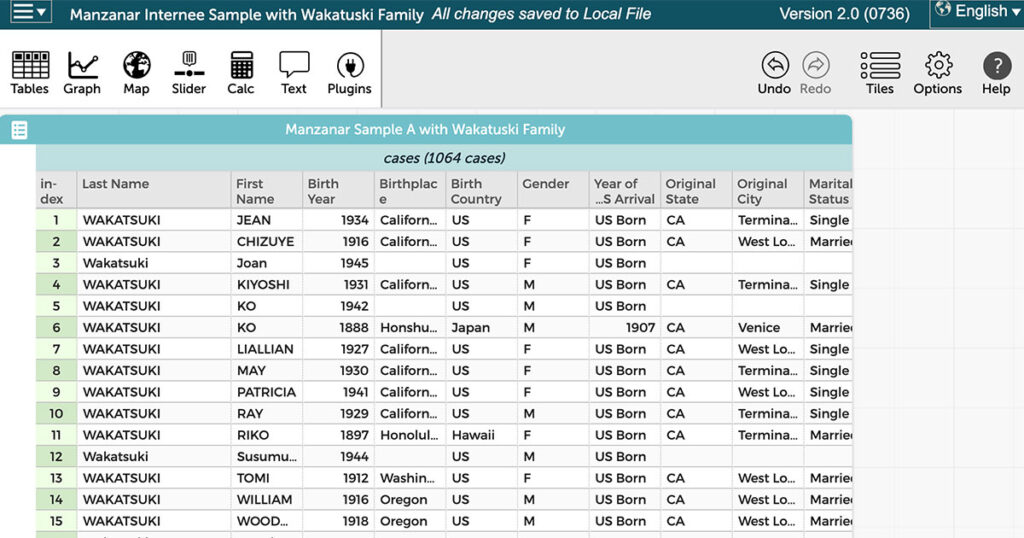
Middle school social studies students typically study 20th century immigration, including the push and pull factors that guided immigration and the policies that shaped travel to (and from) the United States. Additionally, Jeanne Wakatsuki Houston’s memoir Farewell to Manzanar, which details her experience in a Japanese American internment camp during World War II, is a […]
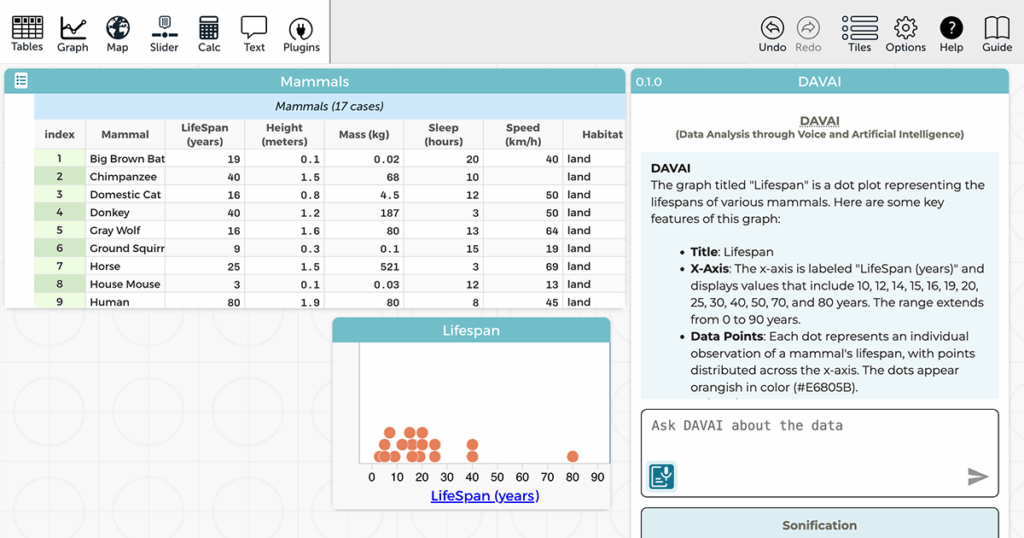
Our Common Online Data Analysis Platform (CODAP) engages learners in data science practices, including data analysis and visualization. But what does “visualization” mean to blind or low-vision (BLV) learners? A new National Science Foundation-funded project is using artificial intelligence (AI) to develop and research new tools for making data exploration accessible to BLV learners. Graphs—and […]
Joe Polman is the Associate Dean for Research and a Professor at the University of Colorado Boulder. Kate Miller is a Research Associate. Cynthia McIntyre is the Director of Communications. Over the course of two years, our National Science Foundation-funded Contextualizing Data Education via Project-Based Learning (DataPBL) project co-designed addenda to four middle school English […]
Trang Tran is a Research Assistant Professor at the University of Alaska Anchorage. Joe Polman is the Associate Dean for Research and a Professor at the University of Colorado Boulder. Kate Miller is a Research Associate. Cynthia McIntyre is the Director of Communications. A new National Science Foundation-funded study investigated how interdisciplinary, project-based learning can […]