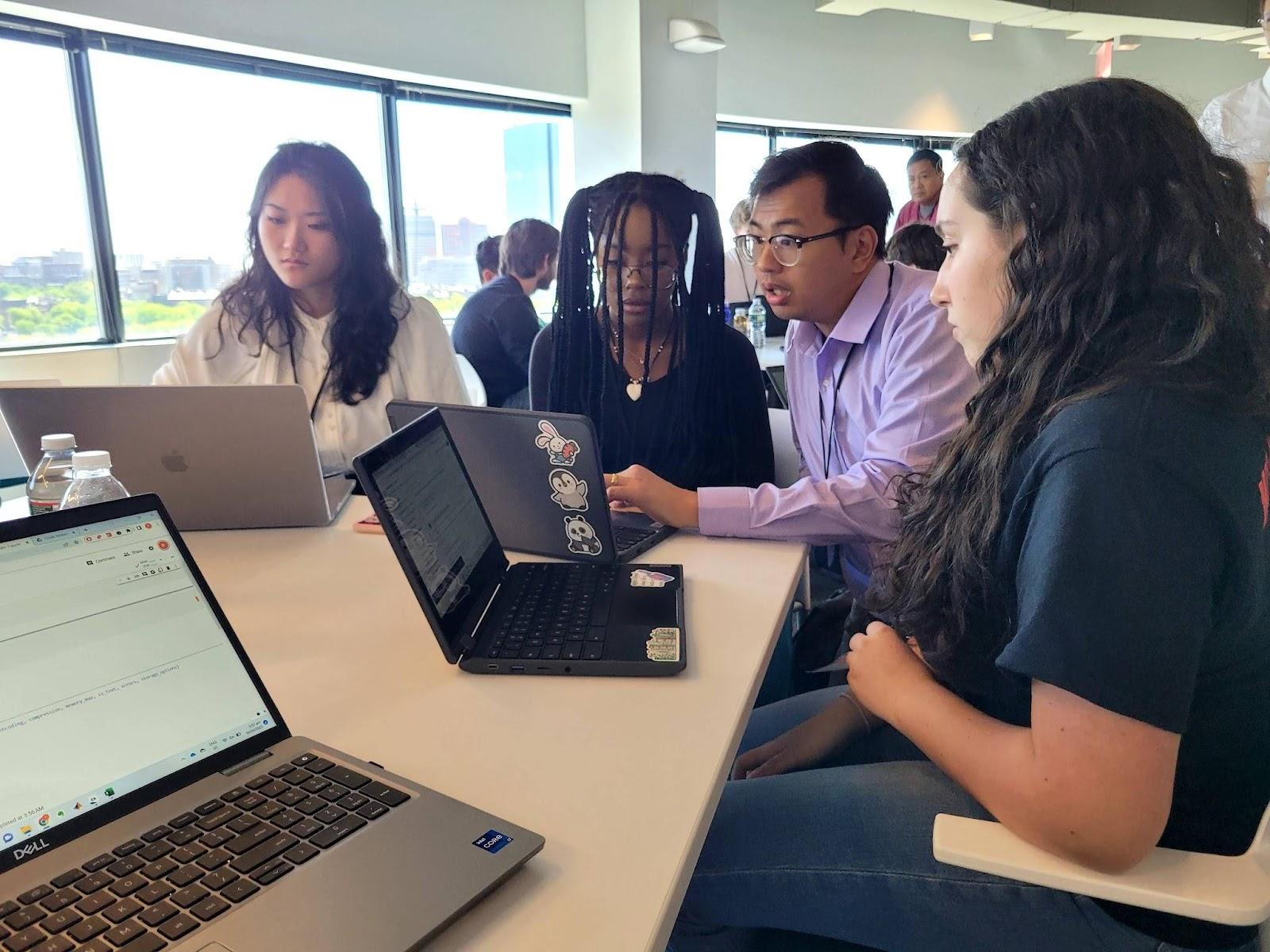
Integrating Data-Driven Explorations with Modeling in Environmental Sciences
Importance
Today’s pressing environmental problems—from clean water to ocean health, and biodiversity—present a meaningful context for students to understand patterns, cause and effect, and the restorative potential of science. Scientists use visualizations and models to understand and communicate about complex systems. Two technologies show promise for helping K-12 students explore these environmental issues: data exploration and agent-based modeling (ABM).
Uniting data exploration and agent-based models holds transformational potential to help students meaningfully connect patterns among variables in a dataset to their underlying mechanisms in the real world. The project targets middle school youth because students’ career aspirations are shaped at this age. Students need models of what they can be and become to develop STEM agency and identity. In particular, students need opportunities to develop a sense of shared identity and to envision futures in which they are a part of the scientific research community.
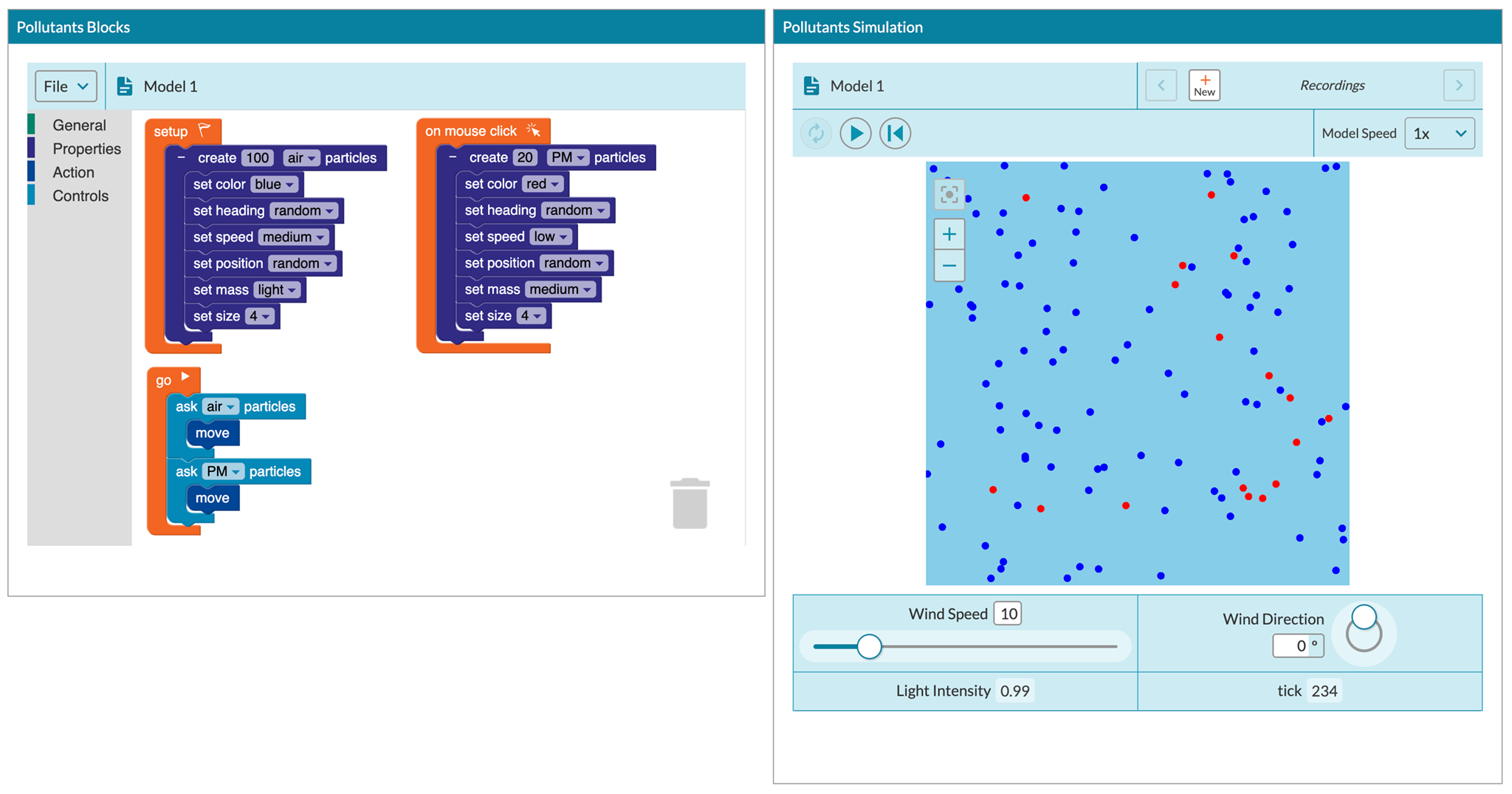
This project will integrate data explorations in CODAP (Common Online Data Analysis Platform) with ABM in MoDa (Modeling and Data), and embed the integrated platform in three middle school environmental sciences units that invite students to investigate patterns and causality in critical environmental issues.
This project aims to broaden participation in and illuminate career pathways towards computational environmental sciences by promoting a sense of efficacy, values, and identity for youth through access to computational technologies for investigating environmental issues and exposing youth to role models. This project will provide both technology-rich opportunities for students to explore consequential environmental issues through data explorations and ABM, and opportunities for students to explore career pathways through direct interactions with environmental scientists.
Research
The project is guided by the following research questions:
- How do students’ reasoning practices and conceptual understandings of target phenomena co-develop as they interact with the integrated technology and units?
- How does engaging with the program, including the curricula and Zoom-in on Science sessions, impact students’ self-efficacy, attributed values, and sense of identity towards science and computing?
- What design features of the program contribute to these shifts?